noomiclone

noomiclone
Noomiclone: The Shortest Clean Attempt on One Fixed Bar
noomiclone is a browser physics game built on a single piece of apparatus and four keys. A ragdoll gymnast hangs from a high bar, arches to build a swing, tucks to change rotation, and lets go at the moment that carries the body toward the next grip. The build runs as one Unity WebGL scene, so there is no map screen, no mode select and no route to choose before the first press. That is the whole reason the game rewards a shortest-route mindset: the problem never changes, only your inputs do.
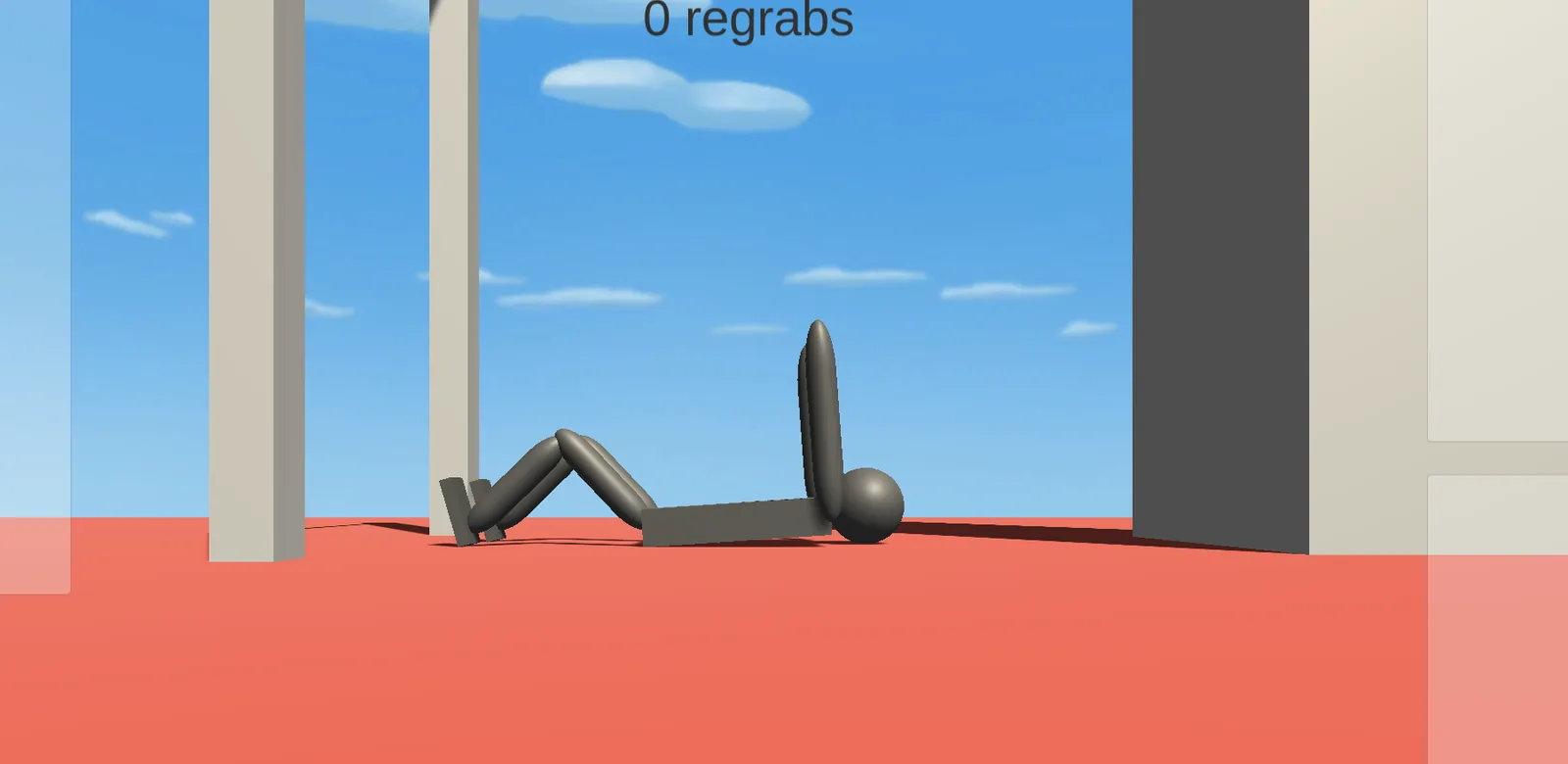
Nothing on screen counts seconds. The readout at the top counts regrabs, starting at 0 on the opening hang and climbing each time the athlete finds the bar again. A run is scored by how far you get, while the thing you actually control is how few corrections each catch costs. Read the counter as distance, and treat the timing it never scores as the part you have to keep yourself.
Noomiclone Controls: Which Key Opens Which Part of the Swing
- 1
Arch the back
The only key you hold rather than tap. Arching is the shape carried through the bottom of the swing, so it decides how much of the arc turns into momentum. Tap it and release, and the swing is weaker than it looks. (Left arrow)
- 2
Tuck the knees
A tighter body turns faster. This changes how the landing arrives rather than where it goes, which is why it belongs after the release. Held too long, it rotates the athlete past the grip. (Spacebar)
- 3
Let go of the bar
The one irreversible press. By this point the swing has already stored the momentum, so the release decides the whole flight. Nothing pressed afterwards repairs an early or late let-go. (Up arrow)
- 4
Reset the attempt
R returns to the opening hang in the same scene, with no menu and no load. Because the build ships one scene, the reset reproduces the previous starting position exactly. (R)
Why an Attempt Grows Longer After the First Miss
The cost of a missed catch is not distance, because the counter does not go backwards. The cost is a reset plus the seconds it takes to rebuild the same swing, and each reset returns you to a bar that has not moved. Three corrections account for most of that waste, and they are easy to tell apart once you know which one you made.
Of the three, an early release is the cheapest to read. You undershoot, the body drops short of the grip, and the gap is visible in the air. A late release is the expensive one, because the flight looks almost right for half a second before the athlete sails past the bar. The third, holding the arch too long, reads as a good swing that arrives at the wrong part of the rotation.
- Short flight: released before the swing reached its peak, reset and rebuild.
- Overshoot: released after the peak, which looks correct until the catch fails.
- Over-rotation: arch carried too far, so the body turns away from the grip.
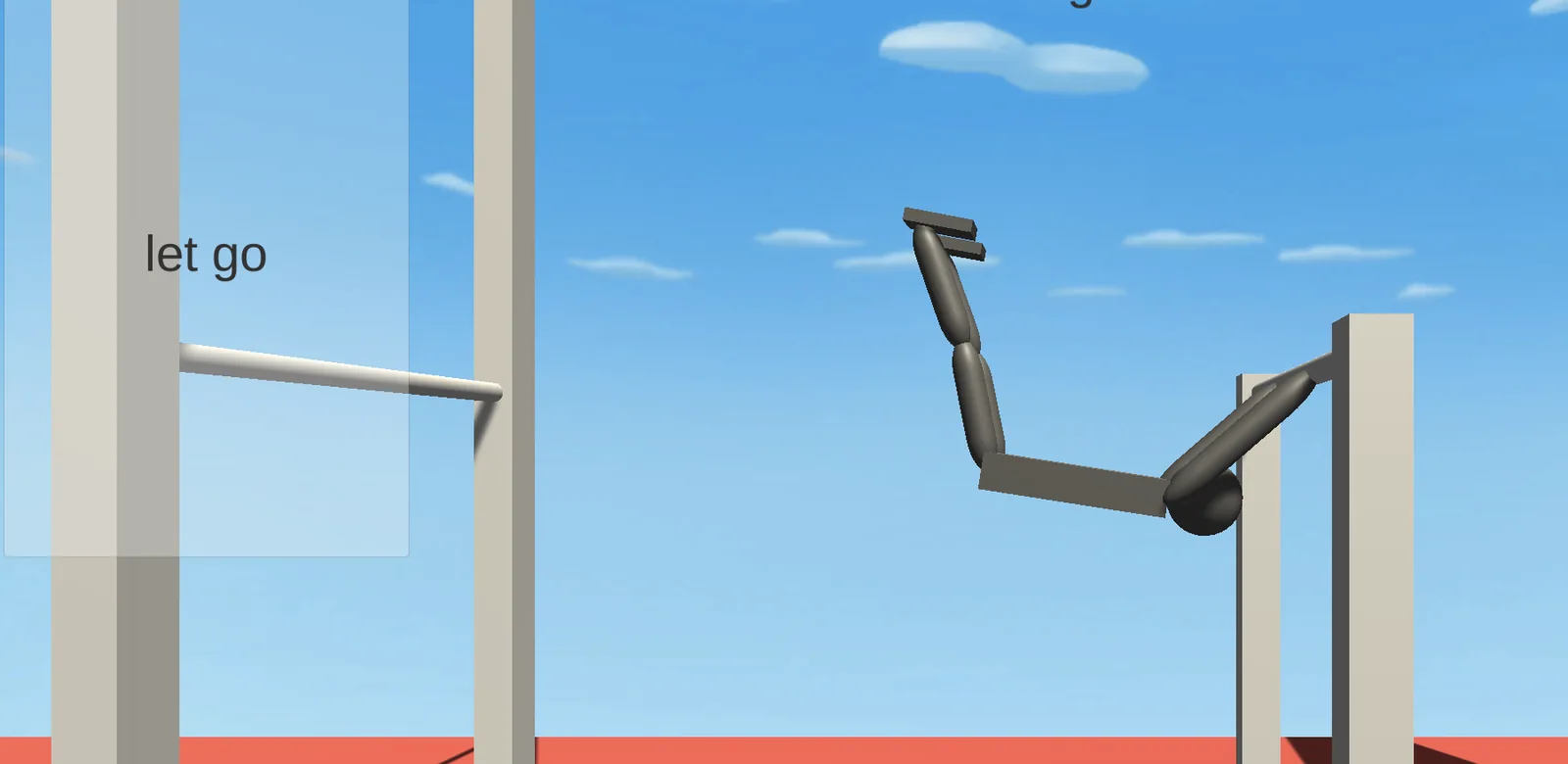
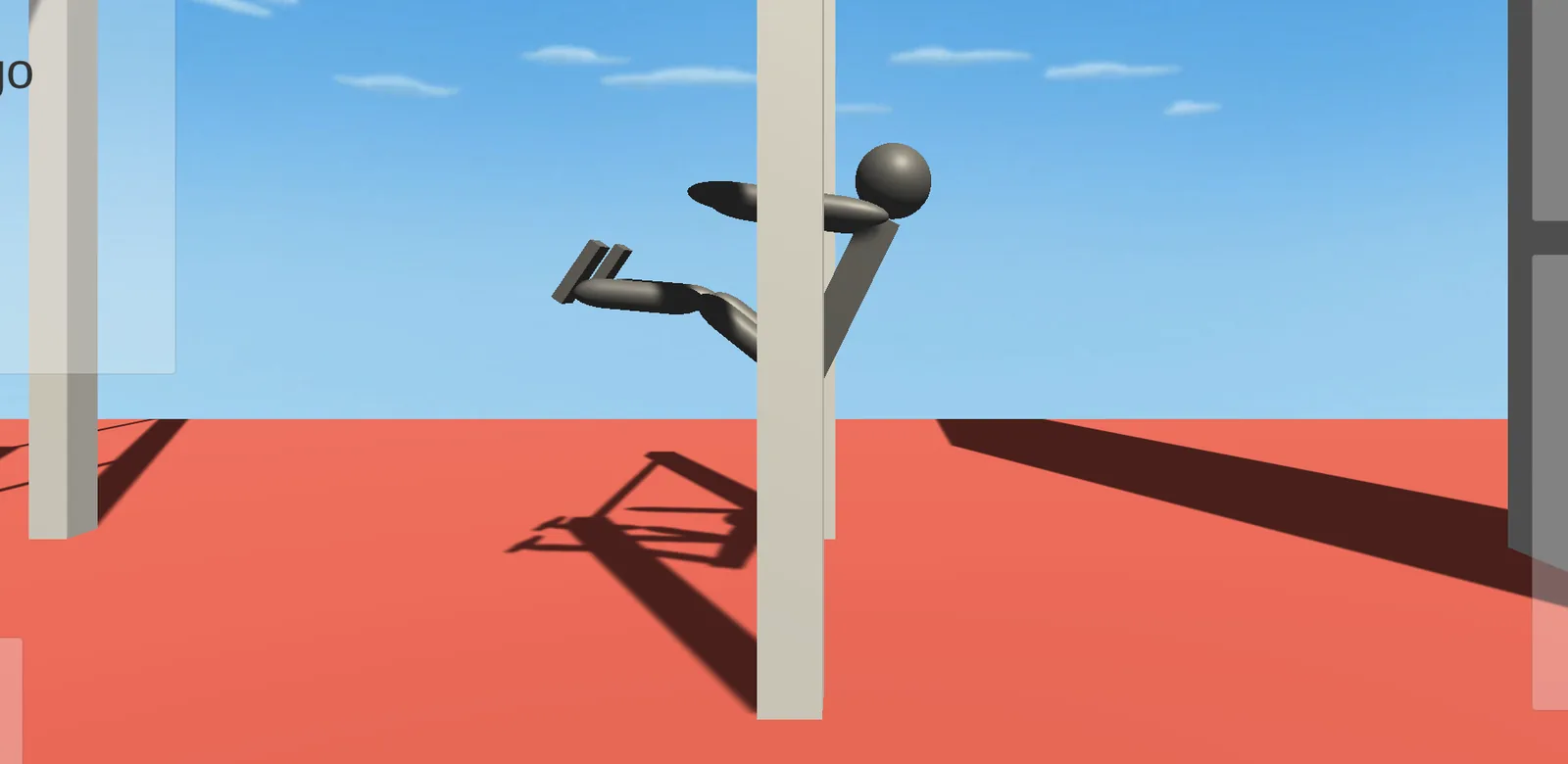
Noomiclone Screenshots: Hang, Cartwheel and the Landing
Noomiclone Timing: The Clock the Game Leaves Out
No clock appears anywhere in the interface, so a timed run is something you bring to the game rather than something it hands you. The only readout counts catches: it sits at 0 on the opening hang and moves when the athlete finds the bar again. A long attempt and a clean attempt can therefore finish on the same figure, which is fine for distance and useless for a route.
That gap is the practical case for timing yourself. Count the keys spent on one catch rather than the catches in a session: four presses is tidy, six means a correction, eight means the release was decided before the swing was read. A personal best built on 40 regrabs and a run of 12 can carry the same counter value, which is why I would not treat the top of the screen as a speed scoreboard.
Reset Is the Fastest Key on the Board
R is the closest thing this build has to fast travel. It drops you at the opening hang without a menu, a loading bar or a confirmation, so the distance between two attempts is one key press. In a game that shuffled scenes between attempts, a reset would hand you a different problem and the practice would not compound. Here it hands you the same one, and that is what turns a session of misses into a route you can repeat.
My reading is that the browser build behaves like a practice tool more than a campaign. One scene and an instant reset are the two properties a route planner would ask for, and this build has both, whether or not that was the intent behind shipping a single scene.
Noomiclone Tips: Fix One Correction per Attempt
Most attempts fail for one of three reasons, and trying to fix all three at once hides which one you hit. Start with the release, because it is the only press that cannot be undone and the only one that leaves a readable trace: a short flight and a long one look nothing alike in the air. Hold the arch until the body passes under the bar, then let go on the way up rather than at the top.
The tuck is the second thing to learn and it is a smaller lever than it looks. It changes rotation speed, which buys or costs a fraction of a turn at the catch. Treat it as trim rather than as a save, and the timing of the release stops drifting between attempts.
One habit pays off early: keep the fixed bar in view instead of the swinging body. The bar is the only reference in the scene that does not move with the pendulum, so it is the one object that tells you where the release point actually is.
Noomiclone FAQ
How do you play noomiclone?
Hold the left arrow to arch, press space to tuck, press the up arrow to let go, and press R to reset. The aim is to release at the point where the stored momentum carries the gymnast to the next grip.
Is there a map or mode select in the browser version?
No. The build on this page loads straight into one fixed scene and offers no selection screen, so the same apparatus and the same starting hang are what every attempt begins with.
What does the regrab counter measure?
Successful catches. It reads 0 at the start and rises each time the athlete grabs the bar again, so it tracks how far a run went rather than how quickly it got there.
How do I restart an attempt in noomiclone?
Press R. It returns to the opening hang in the same scene, which makes it usable as a practice loop rather than as a penalty.
Why does the gymnast keep missing the next bar?
Release timing is the usual cause. Letting go early leaves the body short, letting go late carries it past the grip, and holding the tuck too long rotates it away from the bar.
Do I need to download anything to play noomiclone?
No. It runs in the browser tab as a WebGL scene, so there is no installer and no update step. The first load is the only one that has to pull the build.
Games to Play After a Noomiclone Session
Three more browser games on this site, chosen for what they ask of a short attempt rather than for looking similar.


